Formulating Friday cold process emulsifier series: Sepigel™ 305 and Sepiplus 400 (part one) – profile of Sepiplus 400

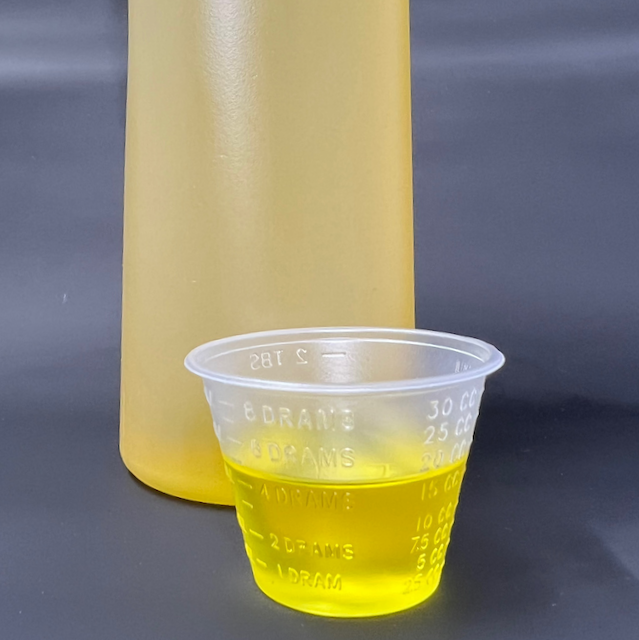
A shot glass filled with a white, opaque, thicker liquid stands beside a bottle. The liquid is Sepiplus 400, a cold process liquid emulsifier.

Welcome to part one of this new series in which we’ll be making formulas using Sepigel 305 or Sepiplus 400! These awesome, liquid, cold process, non-ionic emulsifiers can make emulsions, gels, and gel-creams in less than 10 minutes using low/no shear mixing! Woo hoo! We met Sepigel 305™ (INCI: Polyacrylamide (and) C13-14 Isoparaffin (and) Laureth-7)...

This content is for Foundation, Formulation, and Innovation members only.
Subscribe
Already a member? Log in here

Chemistry Thursday: Reviewing what we’ve learned about triglycerides so far and how that affects the melting temperature and potential for grains in oils, solid oils, and butters, part 42

Welcome back to this introduction to cosmetic chemistry course! We took a break for the month of December because I know how busy everyone gets, so let’s pick it back up for 2026! Let’s start with a review of what we’ve learned so far and why it’s important when formulating products! An important note about...

This content is for Foundation, Formulation, and Innovation members only.
Subscribe
Already a member? Log in here

#alltheingredients: Sepigel 305™ (INCI: Polyacrylamide (and) C13-14 Isoparaffin (and) Laureth-7) – cold process liquid emulsifier – updated January 2026

Woo hoo! We’re starting our cold process emulsifier series this Friday, January 9th, 2026, so I thought I’d update this profile of Sepigel™ 305, which we’re using with or instead of Sepiplus™ 400. Let’s take a look at this one today, then the other on Friday.  Sepigel 305™ (INCI: Polyacrylamide (and) C13-14 Isoalkane (formerly Isoparaffin)...

This content is for Foundation, Formulation, and Innovation members only.
Subscribe
Already a member? Log in here

Let’s talk about costs of making products! Part two – emulsified body butters with formulas! 

Welcome back to this short series in which we’re looking at making changes to our ingredients to create less expensive products, like anhydrous products and emulsions. In part one, we looked at the costs for an anhydrous whipped body butter using shea butter as the base. We took the cost of our shea butter based...

This content is for Foundation, Formulation, and Innovation members only.
Subscribe
Already a member? Log in here

Let’s talk about costs of making products! Part one – whipped body butters

A photo from above of three types of whipped butters in jars. The top is a whipped shea butter with green jojoba beads. The second, below, is a whipped refined shea butter. The third, beside the second, is a whipped unrefined shea butter.

I know things are getting tight financially for everyone, so I thought we could look at making some less expensive products, like emulsions and anhydrous products in January! In general, the most expensive products you’ll make will be anhydrous* ones – whipped butters, salves, balms, lip balms, facial oils and serums, beard oils, hair oils,...

This content is for Foundation, Formulation, and Innovation members only.
Subscribe
Already a member? Log in here