Chemistry Thursday: More about the impact of the melting point of triglycerides the melting point of cocoa and shea butters that we can use to make awesome products, part 44

Let’s continue our investigation into triglycerides in part 44 by looking at the melting points of various forms of triglycerides in butters, before getting to our fun experiment about the heating and cooling of said butters to see how the way we formulate with them affects their physical properties and sensory characteristics that I’ll be...

This content is for Foundation, Formulation, and Innovation members only.
Subscribe
Already a member? Log in here

Formulating Friday cold process emulsifier series: Sepigel™ 305 and Sepiplus 400 (part one) – profile of Sepiplus 400

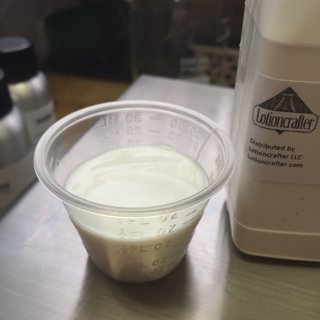
A shot glass filled with a white, opaque, thicker liquid stands beside a bottle. The liquid is Sepiplus 400, a cold process liquid emulsifier.

Welcome to part one of this new series in which we’ll be making formulas using Sepigel 305 or Sepiplus 400! These awesome, liquid, cold process, non-ionic emulsifiers can make emulsions, gels, and gel-creams in less than 10 minutes using low/no shear mixing! Woo hoo! We met Sepigel 305™ (INCI: Polyacrylamide (and) C13-14 Isoparaffin (and) Laureth-7)...

This content is for Foundation, Formulation, and Innovation members only.
Subscribe
Already a member? Log in here

Chemistry Thursday: Reviewing what we’ve learned about triglycerides so far and how that affects the melting temperature and potential for grains in oils, solid oils, and butters, part 42

Welcome back to this introduction to cosmetic chemistry course! We took a break for the month of December because I know how busy everyone gets, so let’s pick it back up for 2026! Let’s start with a review of what we’ve learned so far and why it’s important when formulating products! An important note about...

This content is for Foundation, Formulation, and Innovation members only.
Subscribe
Already a member? Log in here

Formulating Friday cold process emulsifier series: SEPILIFE™ NUDE and SIMULGEL™️ EG – increasing the viscosity by adding a structuring agent (part 8 with formulas and new instructions)

A photo of three containers after packaging a cold process emulsion using SEPILIFE™ NUDE. The first beaker contains a bit of lotion with a black spatula. The second contains three small tottle bottles. The third has a blue spatula.

Welcome to part eight of this series/course – Formulating Friday cold process emulsifier series – in which we’ll look at how to increase the viscosity by adding oil-soluble solid-at-room temperature ingredients by creating a new heated oil phase for the formula. In our last post on November 29, 2025, we looked at increasing the viscosity...

This content is for Foundation, Formulation, and Innovation members only.
Subscribe
Already a member? Log in here

Formulating Friday cold process emulsifier series: SEPILIFE™ NUDE and SIMULGEL™️ EG – increasing the viscosity by adding a butter (part 7 with formulas and new instructions)

A white plastic weighing boat contains some cream coloured chunks of tucuma butter. The boat is sitting on a red tablecloth.

Welcome to part seven of this series/course – Formulating Friday cold process emulsifier series – in which we’ll look at how to increase the viscosity by adding oil-soluble solid-at-room temperature ingredients by creating a new heated oil phase for the formula. In our last post on October 31, 2025,  we looked at increasing the viscosity...

This content is for Foundation, Formulation, and Innovation members only.
Subscribe
Already a member? Log in here