Q&A: Can we use more than one active in a facial moisturizer?
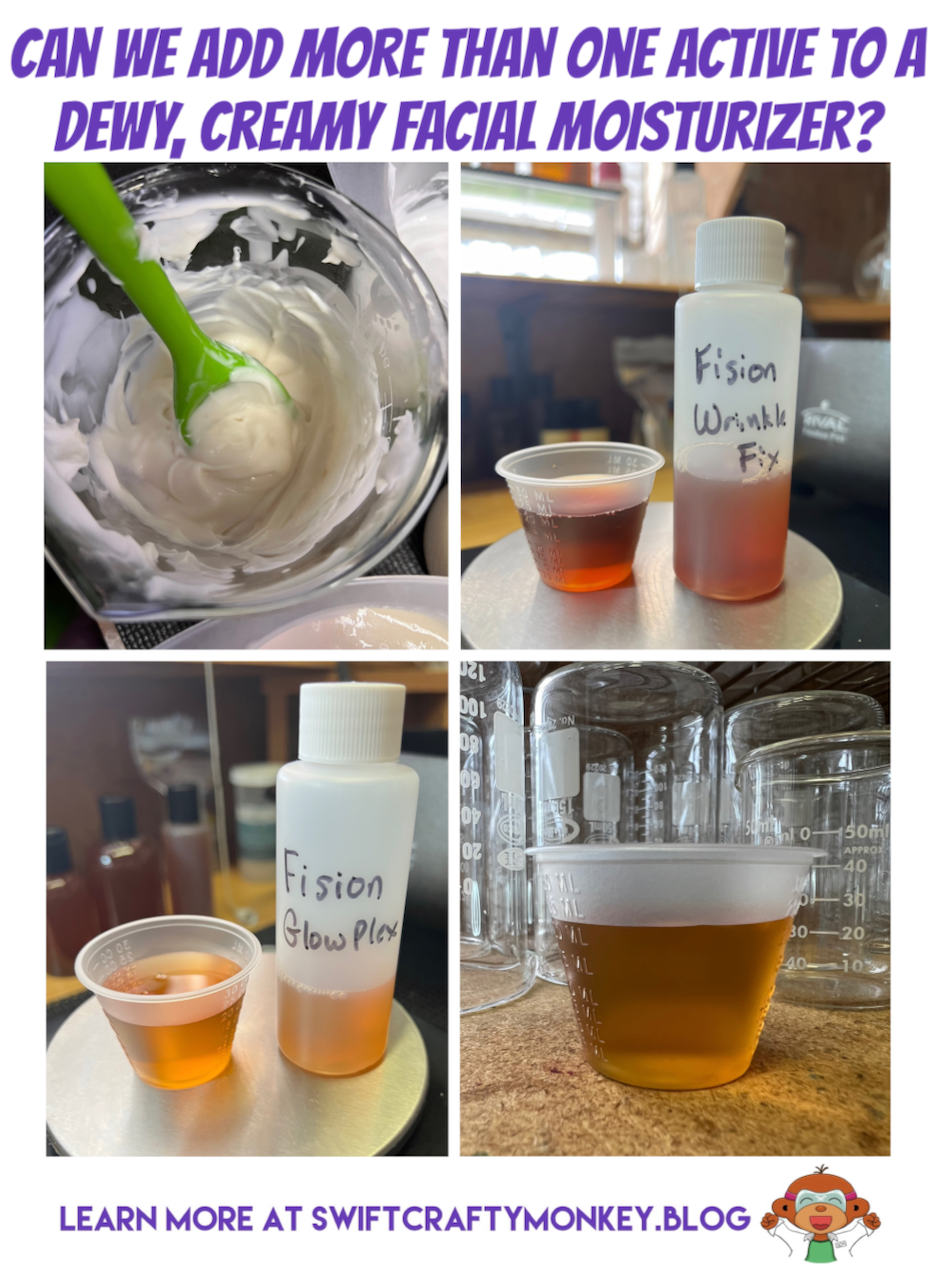
A collage of four photos. The upper left is of a beaker with a creamy moisturizer in it with a green spoon. The upper right is of a bottle with brown liquid and a cup with brown liquid on a metal scale. The liquid is Fision® Wrinkle Fix. The lower left photo is of Fision® Glow Plex, a bottle and a cup with light brown clear liquid sit on a metal plate on a digital scale. The lower right photo is of Fision® Instant Lift, a clear brown liquid in a plastic shot glass sitting on a brown shelf in front of beakers.

In the monthly Q&A, Katherine asked, For the Facial Moisturizer you made during the Zoom workshop February 8th, do you ever add more than one active? For example, instead of 3% Fision Wrinkle Fix, could you add 1.5% Fision® Wrinkle Fix and 1.5% of the Fision Instant Lift or 1.5% Fision GlowPlex? Or is it...
This content is for Foundation, Formulation, and Innovation members only.
Subscribe
Already a member? Log in here

Formulating Friday cold process emulsifier series: Sepigel™ 305 and Sepiplus 400 – adding more humectants, part four

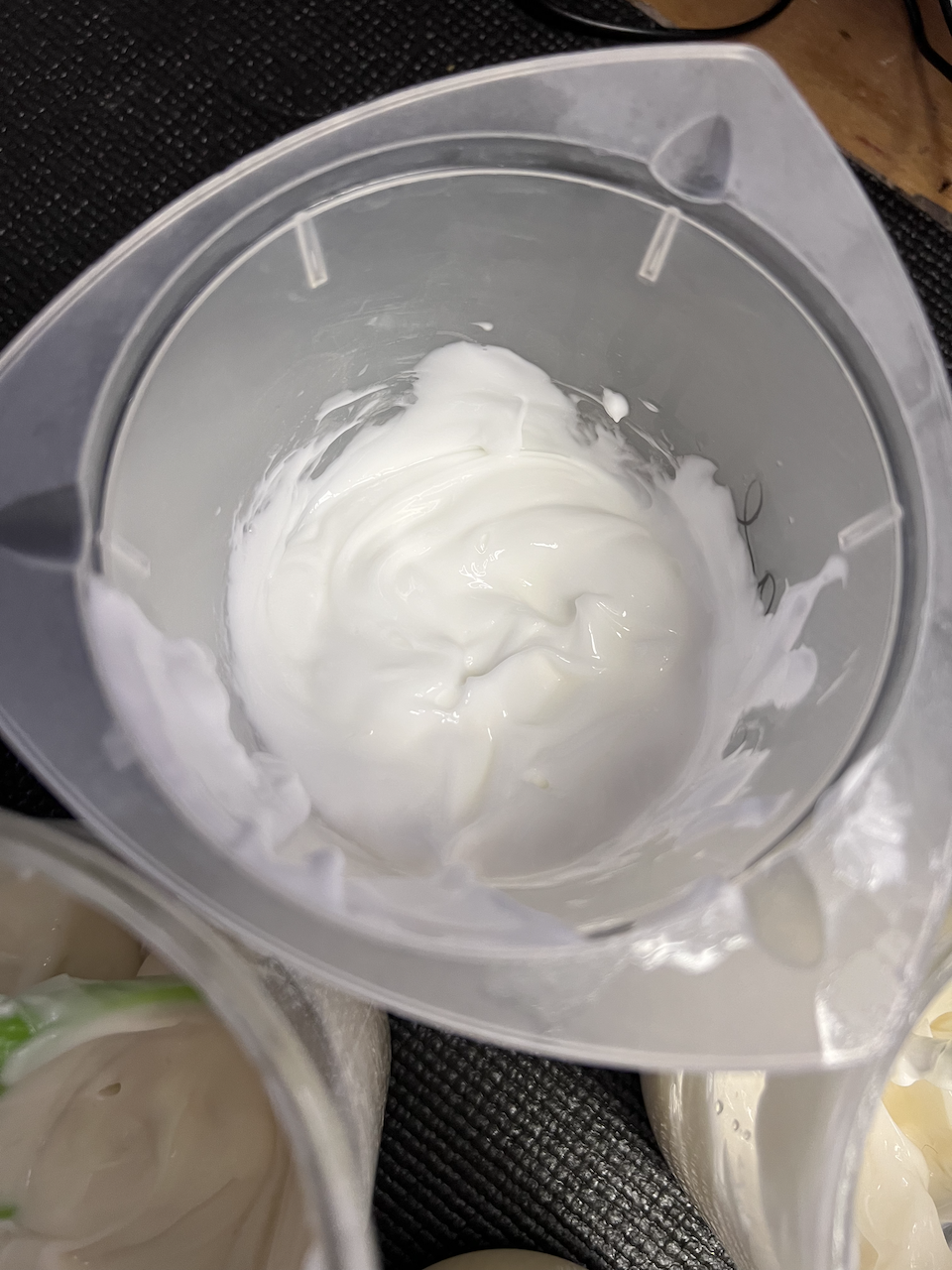
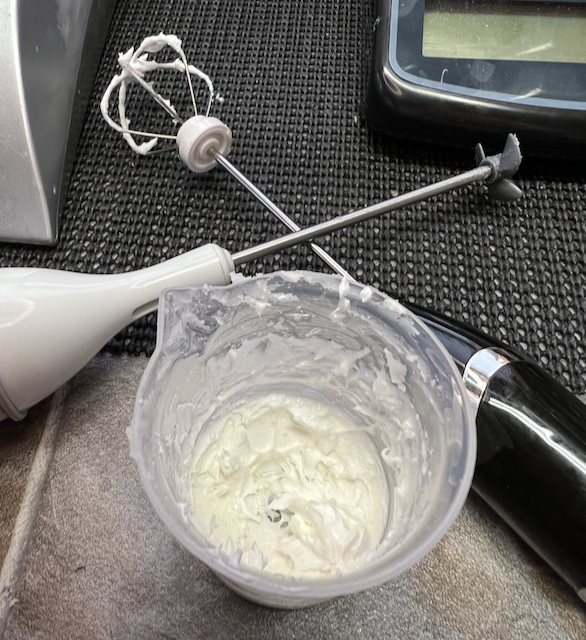
A plastic container sits on a counter with a very white, thicker looking emulsion inside. This is a lotion made with Sepigel 305.

Formulating Friday cold process emulsifier series: Sepigel™ 305 and Sepiplus 400 – adding more humectants, part four Welcome to part four of this series/course which we’re creating formulas using Sepigel 305 or Sepiplus 400! These awesome, liquid, cold process, non-ionic emulsifiers can make emulsions, gels, and gel-creams in less than 10 minutes using low/no shear...

This content is for Foundation, Formulation, and Innovation members only.
Subscribe
Already a member? Log in here

Formulating Friday cold process emulsifier series: Sepigel™ 305 and Sepiplus 400 – cream becomes body butter with solid oils and butters (part three)

Welcome to part three of this series/course which we’re creating formulas using Sepigel 305 or Sepiplus 400! These awesome, liquid, cold process, non-ionic emulsifiers can make emulsions, gels, and gel-creams in less than 10 minutes using low/no shear mixing! Woo hoo! We met Sepigel 305™ (INCI: Polyacrylamide (and) C13-14 Isoparaffin (and) Laureth-7) – cold process...

This content is for Foundation, Formulation, and Innovation members only.
Subscribe
Already a member? Log in here

Formulating Friday cold process emulsifier series: Sepigel™ 305 and Sepiplus 400 (part two)

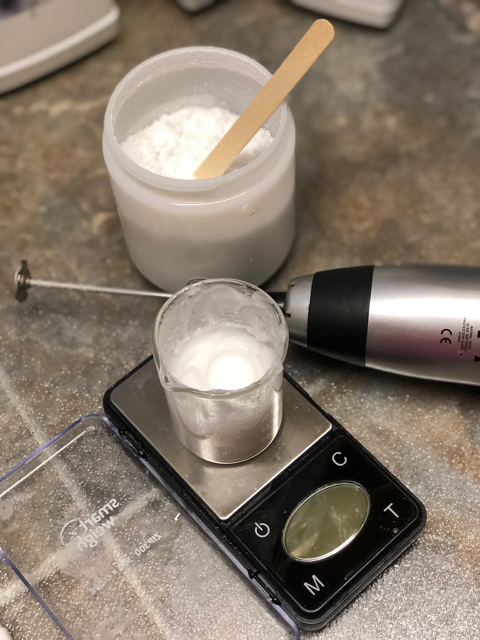
A beaker sits on a digital scale with a white lotion in it. There's a container with a powder, Penstia powder, and a hand held immersion bender beside it.

Welcome to part two of this new series in which we’ll be making formulas using Sepigel 305 or Sepiplus 400! These awesome, liquid, cold process, non-ionic emulsifiers can make emulsions, gels, and gel-creams in less than 10 minutes using low/no shear mixing! Woo hoo! In this post, we’re comparing and contrasting these emulsifiers, then we’ll...

This content is for Foundation, Formulation, and Innovation members only.
Subscribe
Already a member? Log in here

Formulating Friday cold process emulsifier series: Sepigel™ 305 and Sepiplus 400 (part one) – profile of Sepiplus 400

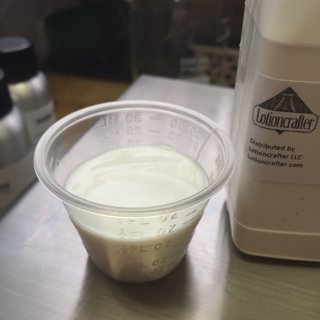
A shot glass filled with a white, opaque, thicker liquid stands beside a bottle. The liquid is Sepiplus 400, a cold process liquid emulsifier.

Welcome to part one of this new series in which we’ll be making formulas using Sepigel 305 or Sepiplus 400! These awesome, liquid, cold process, non-ionic emulsifiers can make emulsions, gels, and gel-creams in less than 10 minutes using low/no shear mixing! Woo hoo! We met Sepigel 305™ (INCI: Polyacrylamide (and) C13-14 Isoparaffin (and) Laureth-7)...

This content is for Foundation, Formulation, and Innovation members only.
Subscribe
Already a member? Log in here