Let’s talk about making substitutions for preservatives in my formulas! (Very long post!)

This is a long post that didn’t have a logical place to make cuts, so rather than spend time re-writing it, here’s a few days of posts in one!  For a while now, I’ve shared charts with you so you can make substitutions for the preservatives that you have in your workshop if you can’t...
This content is for Foundation, Formulation, and Innovation members only.
Subscribe
Already a member? Log in here

Let’s talk about potential restrictions on preservatives!

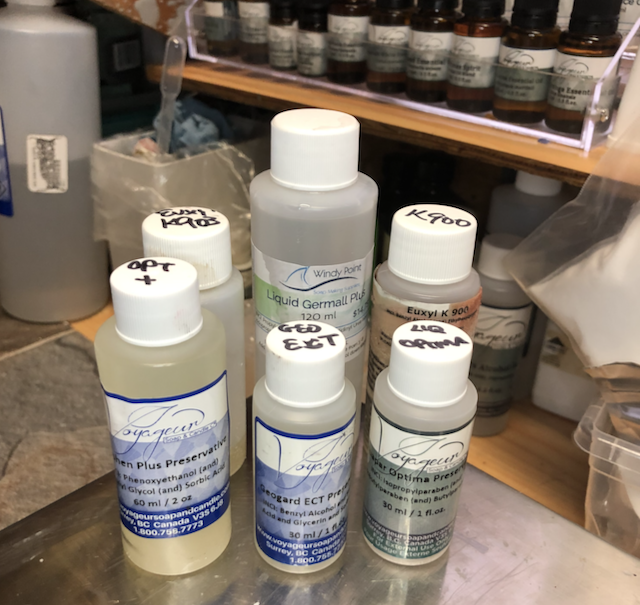
Six plastic bottles containing preservatives sit atop a metal plate on a digital scale

There may be restrictions on certain preservatives in your part of the world, something to keep in mind when you’re following formulas or creating new ones. I do my best to keep up to date on these things, but I can’t possibly know every single restriction outside of Canada or the USA because I only...

This content is for Foundation, Formulation, and Innovation members only.
Subscribe
Already a member? Log in here

Q&A: What do “fish eyes” look like when we use rheology modifiers?

In the monthly Q&A, Chavi asked, You also use the term “fish eyes when using rheology modifiers. Could you provide a photo so I know what to look for? Thanks! “”Fish eyes” are agglomerates of partially hydrated powders characterized by a tough outer layer which prevents the complete wetting of particles within the interior.” (Reference) Basically, they’re...

This content is for Foundation, Formulation, and Innovation members only.
Subscribe
Already a member? Log in here

Q&A: What’s the process to thicken surfactants with salt?

In the monthly Q&A, Chavi asked, Hi Susan, I often see you mention if a surfactant blend can be thickened with salt. Could you describe the actual process of thickening with salt? Thanks! Adding salt – sodium chloride, table salt – is a good way to thicken certain surfactants and blends! It does this in two...

This content is for Foundation, Formulation, and Innovation members only.
Subscribe
Already a member? Log in here

Let’s talk about what it means for an ingredient or product to be vegan!

This came up the other day, and I thought it’d make for an interesting post. What does it mean for an ingredient or product to be vegan? Quick summary if you don’t want to read the whole post: When it comes to making products, most of our ingredients are plant- or mineral-derived (like sand or...

This content is for Foundation, Formulation, and Innovation members only.
Subscribe
Already a member? Log in here